
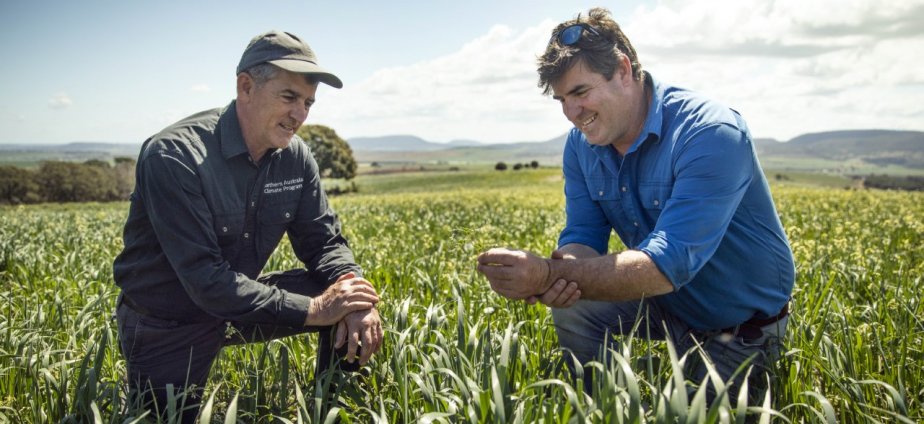
Grazier Darren Marshall credits the advice of a trusted friend with overcoming tough decisions in the face of Australia’s worst drought in history.
Mr Marshall was in the process of converting a property in Warwick into ideal pastoral land when years of poor rain brought things to a standstill. “There were a couple of years there it was too risky to establish the needed medics to renew the pastures. We couldn’t do anything and this time last year was certainly the worst of it,” Mr Marshall said.
Mr Marshall consulted his local ‘Climate Mate’ Paul Webb who is involved with University of Southern Queensland and Queensland Government’s Northern Australia Climate Program. Picked for their knowledge of the industry and their capacity to network and communicate with producers, Climate Mates share regionally specific and forecast information as well as gather research on product development.
“I’ve known Paul for a long time, and we were talking my options. The information he shared was really beneficial for me to make decisions as to where to move the cattle and when. Together we looked at the data on rain and pasture growth predictability. Based on that I moved the cattle to a different property with a better outlook,” Mr Marshall said.
The Northern Australia Climate Program is a partnership between the Queensland Government, Meat and Livestock Australia and the University of Southern Queensland to help producers manage drought and climate risks. The Climate Mate initiative connects local representatives with leading researches at University, BOM and UK Meteorological Office for local experts to help landholders.
“One of the challenges for landholders is to interpret global or national data for a regional setting, asking what it means for them and how reliable is it,” Climate Mate Mr Webb said.
Readers also enjoyed Palmer Bridge Opening